

Pampered Chef
My Kitchen
Fall 2019 Hackathon
Winner - Most Innovative
Company: Pampered Chef
Date: October 19’
Platform: Mobile
Roles: UX Architect, UI Designer, Interaction Designer, Team Lead
Business: e-Commerce
Tech: AWS Personalize, SAP Hybris, Google Pay, Apple Pay, Facebook JavaScript SDK
Challenge:
The goal of this project was to improve Pampered Chef’s current state of customer engagement and retention. Although our site’s traffic is highly qualified, a large majority of our customers never place a second order or reengage with the brand.
I believed by providing personalized content via simplified account creation and machine learning technology, we could increase repeat customer orders, average order value, and overall site conversion. This hypothesis was built on the idea that if we incentivized customers to create an account and place a second order, we could start to more accurately capture their behavior and build a “golden record” and use that to be more intentional about how we market and communicate with them.
- Market Research -
We only had one week to build and prepare for the business case, so research time need to be optimized a bit. I conducted some market research and performed a landscape analysis to see what other companies were doing and what technology we could leverage. Reports were pulled from leading digital ad and marketing agencies including; Accenture and Epsilon.
The Impact of Providing a Personalized Experience

Accenture Pulse Check 2018 & Epsilon Digital Transformation Report 2018
- Wireframes -
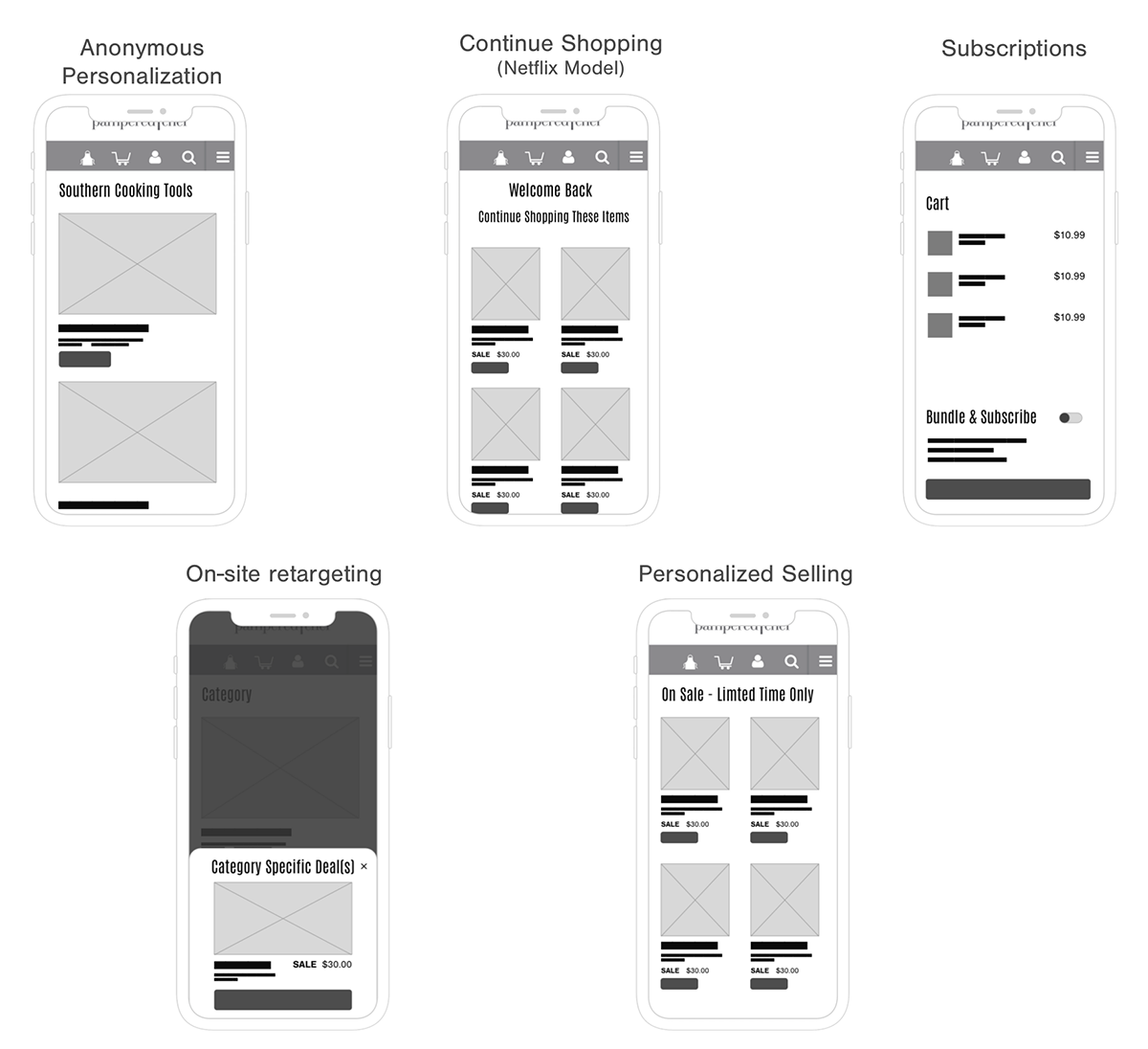
After reviewing ideas and discussing what we could complete in a week, I developed wireframes to provide more context to our opportunities. I included all the options we thought we could build, with brief explanations on how the experience would be introduced to the customer.
- Journey Mapping -
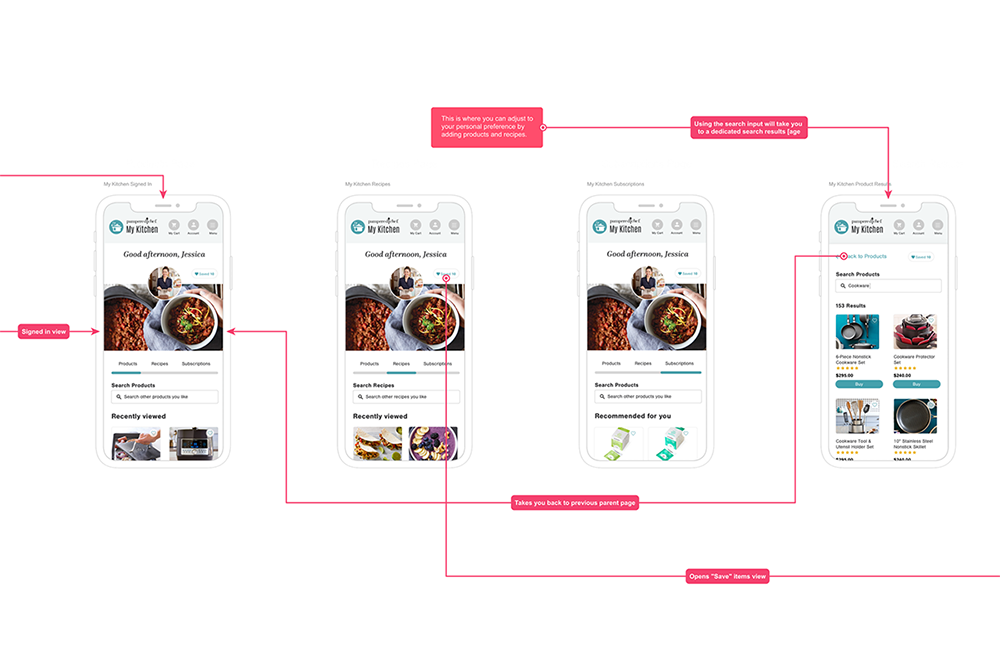
Understanding the initial goal of this project was to encourage account creation and engagement, we focused on on-site retargeting, simplified login, and hyper-personalized shopping. I developed a visual journey map, validated that it made sense from both an experience and an architectural perspective (what we could do in a week), and then started working through the UI and UX.
- Features -
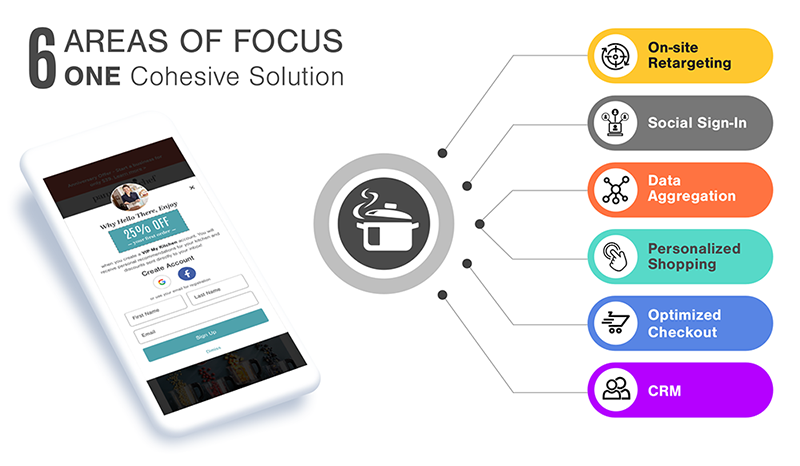
Utilizing the MoSCoW method, we prioritized the previously mentioned features, while also adding social sign-in, optimized checkout, data aggregation, and customer relationship management. Although each feature was very important to the experience, CRM was one that was needed to support the goal of reengagement with the brand. It tied all the behavioral data being captured and funneled it back to our consultants, so they could be more intentional and targeted with their sales and customer support.
- High-fidelity Designs -
Once we had the journey and features decided on, I started to layout the designs. Concentrating specifically on mobile, I developed experiences that supported both our consumers and consultants. The consumer focus was on personalization and the consultant on customer relationship management.
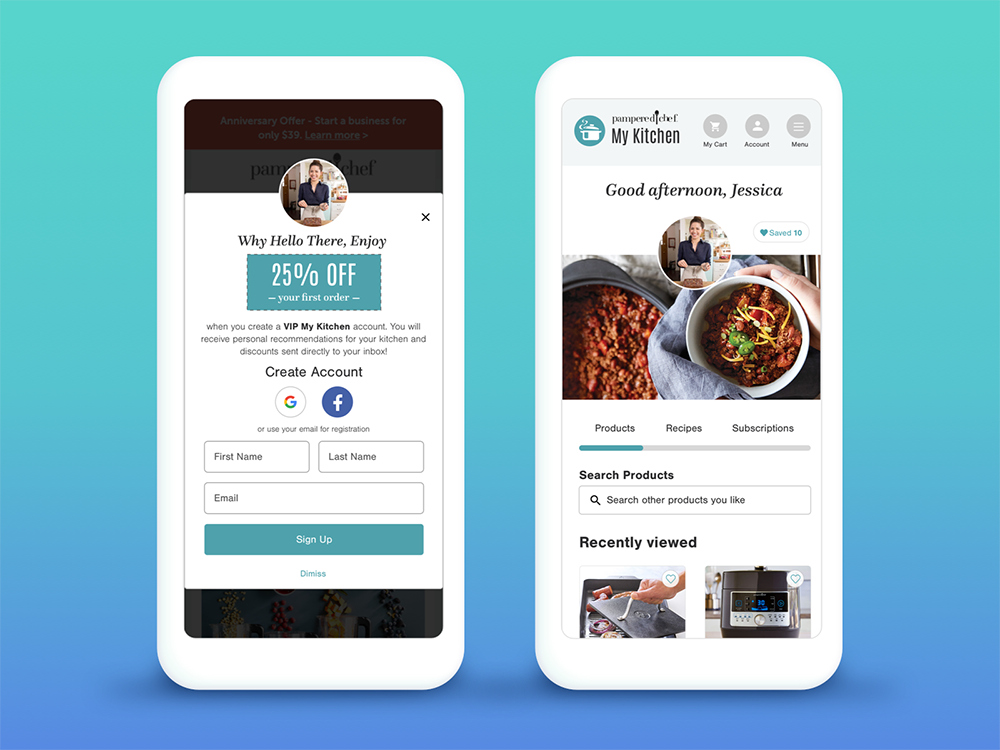
On-site retargeting and account creation - Incentives for account creation were offered, while social sign-in was provided to lower interaction costs on building a personalized shopping experience.
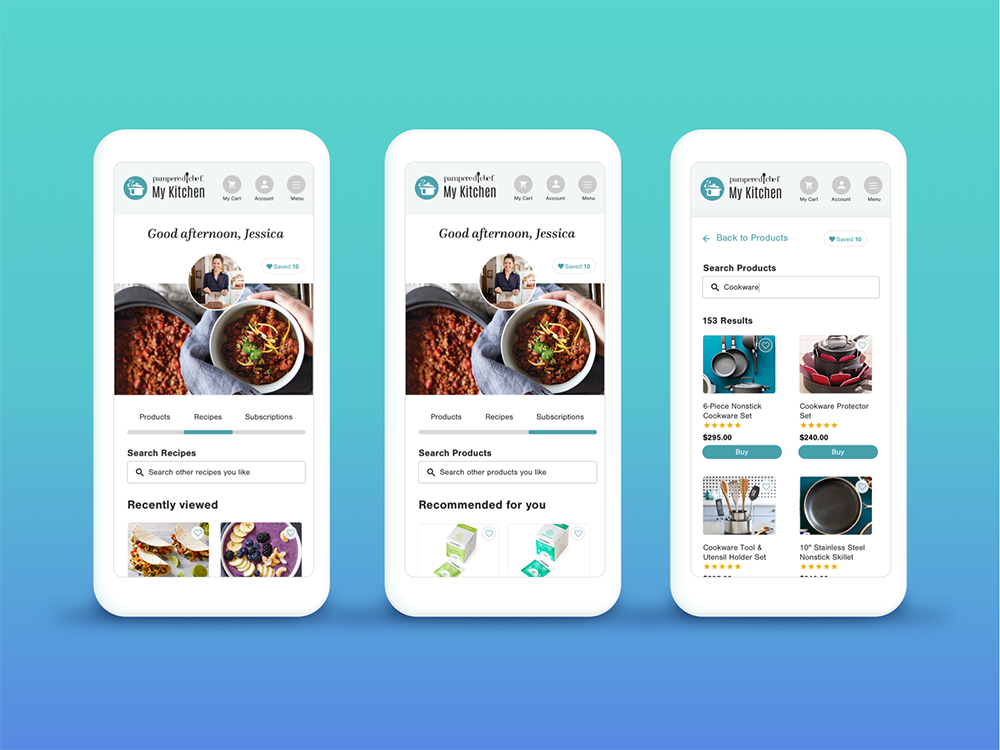
Customer account and personalized shopping - View browsed products, recipes, and subscriptions. Also, easy access to account settings and order history.
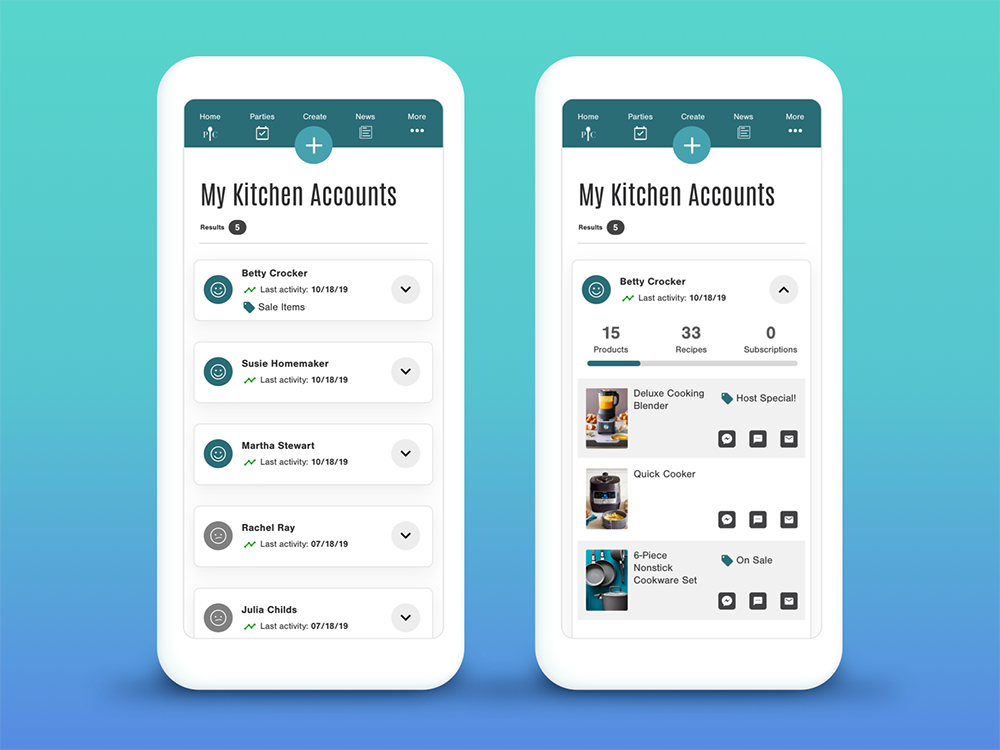
Consultant CRM - These screens show a consultant's view of a customer's shopping behavior, as well as sales and incentives to support that behavior. You will see on the left, the consultant customer accounts and activity are funneled into our company’s back-office tool. On the right, you will see the expanded view of each customer account and the activity happening. Activities include products, recipes, and subscription packages viewed.
- Project Results -
We had a working demo in less than a week that leveraged AWS Personalized — a machine learning service. Although we were not completely production-ready, our POC became a valuable asset to two major 2020 initiatives for the company.
Achievements:
We built 6 features which included: on-site retargeting, social sign-in, data aggregation, personalized content, optimized checkout, and customer relationship management.
We built a solid business case on the benefit to distinct customers with outside orders (orders coming from outside of a party format). With an average 16% increase YOY on these orders, and a conservative 5% lift for conversion on second purchases (within a calendar year) we estimated a $3.4 M return in the first year, $3.9 M in the second, and $4.5 M in the third.
My team took home the award for the most innovative idea.
This project is also being picked up by our Marcom team for a current CRM initiative, as well as our Experience and Innovation team for platform diversification.
Lessons:
The biggest challenge for this project was building the business case to convince leadership of the return for the incentive provided to the customer. The experience was easy to sell, as our economy has shifted from supply-driven to demand-driven and we need to support that expectation.